
People often think GPS fleet tracking begins and ends with a moving dot on a screen. It's a natural assumption. Location data is the most visible output. But that dot is just the entry point. What surrounds it the alerts, the analytics, the historical records is where fleet tracking with GPS actually earns its place in the operation.
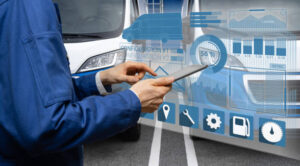
Take route adherence. You've planned the most efficient path. Does the driver follow it? Without GPS, you assume yes. With GPS tracking, you know. Deviations get logged. If a driver consistently takes longer alternate routes, the data shows it. If road conditions actually justify the detour, that's visible too. The system doesn't accuse it records. Managers interpret.
Arrival and departure timestamps are automatically captured at every stop. Customer sites, warehouses, fuel stations every location where a vehicle pauses long enough to register. That data becomes the foundation for billing verification, service confirmation, and operational benchmarking.
Fleet tracking with GPS also supports strong recovery when things go wrong. Vehicle stolen? The GPS signal continues transmitting. Recovery teams have real-time coordinates. Response is fast. Without it, you're filing a police report and hoping.
Temperature monitoring integrations extend the power of GPS tracking for specialized fleets. Refrigerated units carrying perishable goods can transmit both location and cargo temperature simultaneously. If the cooling system fails mid-route, an alert fires before the cargo is ruined. Prevention in real time.
The behavioral data GPS generates over time creates a clearer picture of driver risk. Who speeds consistently on long highway stretches? Who tends to accelerate aggressively in urban areas? Who has a perfect record for six months straight? This information allows fleet managers to make informed decisions about who drives which vehicles, which routes, and during which conditions.
Insurance conversations change when you walk in with GPS data. Some carriers offer meaningful discounts to GPS-tracked fleets because the risk profile is genuinely better. Monitored fleets have lower accident rates, faster recovery of stolen assets, and better documentation of incidents when they do occur.
Battery and engine diagnostics are another layer available in more advanced setups. GPS units that tie into the vehicle's onboard diagnostics can flag fault codes before drivers even notice a problem. A check engine warning that appears on a dashboard becomes a dispatch alert and a service appointment rather than a breakdown on the side of a road.
Fleet tracking with GPS turns a fleet of vehicles into a network of intelligent data points. The dot moves. The data tells the story behind the movement.